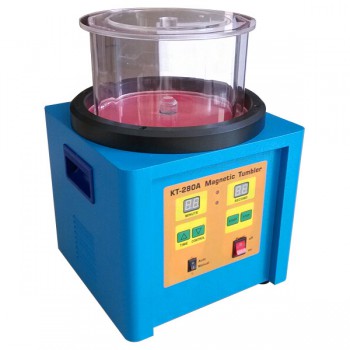
In jewelry making, the journey from a freshly cast or fabricated piece to a gleaming, showroom-ready creation involves several stages of refinement. Among all the finishing tools available, tumblers have become indispensable for modern jewelers who want consistent, efficient, and high-quality results. Whether you craft small batches by hand or run a growing studio, understanding how tumblers transform rough surfaces into radiant finishes can elevate both your workflow and your final product.At the core, a
jewelry magnetic tumbler uses motion, abrasive media, and time to smooth, deburr, and polish metal. But not all tumblers are the same. Rotary tumblers, for example, rely on a rolling motion that gently grinds away imperfections. They excel at smoothing sharp edges and preparing pieces for finer finishing steps. Vibratory tumblers, on the other hand, use high-frequency oscillations to polish faster and maintain more detail, making them ideal for delicate components and complex shapes.For jewelers who work with cast items, tumblers help remove casting skin, soften tool marks, and reduce the labor traditionally required for hand filing and sanding. A well-chosen abrasive media—such as ceramic for cutting, plastic for smoothing, or steel shot for burnishing—allows the maker to fine-tune the finishing process. Steel shot burnishing is especially valued for bringing metals like silver, gold, and brass to a bright, mirror-like shine without removing material.Time savings is one of the most appreciated benefits. Instead of spending hours hand-polishing small components, a jeweler can simply load the tumbler, set a cycle, and work on other tasks while the machine runs. This efficiency not only increases productivity but also ensures a more uniform finish across batches. For small studios, this consistency can be the difference between a handmade look and a professional-grade final product.Tumblers also play a major role in preparing pieces for additional processes. A vibratory tumbler can refine a surface to the point where buffing wheels need only minimal work, reducing the risk of over-polishing details or distorting edges. For chain makers or jewelers working with many small parts, tumblers are often the only practical way to achieve even polishing without tedious manual effort.While tumbling is not a replacement for all hand finishing—especially on high-end custom pieces where precision is key—it is a powerful partner in the overall workflow. When used correctly, tumblers help transform rough, unfinished metal into smooth, radiant jewelry with reliable results every time.Ultimately, the role of tumblers in jewelry finishing is both practical and transformative. They streamline production, improve quality, and free jewelers to focus on the creative aspects of their craft. From rough to radiant, the path to a polished piece is faster, cleaner, and more consistent with tumbling technology on your side.Related articles: https://ameblo.jp/frank35/entry-12949522694.html
truongyen2442y 發表在 痞客邦 留言(0) 人氣(3)
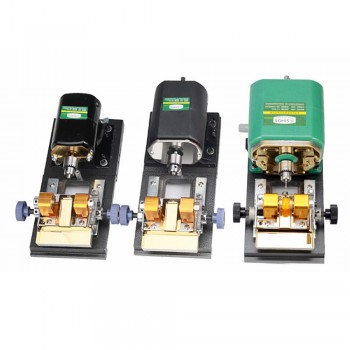 In the world of jewelry making, pearl drilling has always been a delicate and sometimes daunting task. Pearls are organic, brittle, and easily damaged, which means precision tools are essential for achieving professional results. In recent years, compact pearl drilling machines have surged in popularity, reshaping how artisans and small jewelry studios handle pearl customization. Their rise isn’t just a passing trend—it reflects meaningful changes in how jewelers work, invest, and innovate.One of the biggest reasons compact pearl drilling machines are trending is their space-efficient design. Traditional drilling systems were often bulky, requiring dedicated benches and significant workspace. For home-based jewelers or small workshops, this was a major limitation. Compact models, however, are engineered to fit comfortably on a tabletop without compromising drilling accuracy. Their small footprint makes them ideal for makers who want the precision of professional equipment without rearranging their entire studio.
truongyen2442y 發表在 痞客邦 留言(0) 人氣(12)
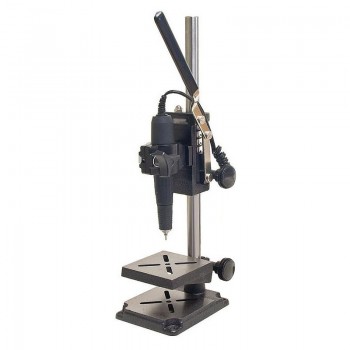 Drilling is one of the most fundamental and versatile techniques in jewelry making. Whether you’re drilling holes for setting stones, creating intricate designs, or adding finishing touches to your pieces, a mini drill press can be your best friend in the studio. Compact, precise, and efficient, this tool offers a level of control that is crucial for jewelry artists. If you’re new to using a jewelry mini drill press or looking to enhance your skills, here are some essential tips to help you master the craft of jewelry drilling.1. Choose the Right Drill Bits
truongyen2442y 發表在 痞客邦 留言(0) 人氣(7)
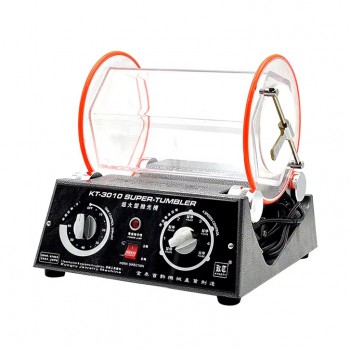 For jewelry artists, achieving a smooth, polished finish can make the difference between an average piece and a professional-quality creation. Jewelry rotary tumblers are one of the most essential tools for this task, yet many makers hesitate to invest in one because of the cost. Fortunately, there are several budget-friendly rotary tumblers that deliver excellent results without draining your wallet. If you’re looking to upgrade your workshop while keeping expenses low, here are the best options to consider.One of the most popular choices among beginners is the single-barrel 3-lb rotary tumbler. Its small size makes it perfect for polishing small batches of jewelry components, gemstones, or metal findings. Despite its simplicity, it offers dependable performance, quiet operation, and enough power to handle typical jewelry-making materials. This type of tumbler often comes with a rubber barrel that reduces noise and provides gentle yet effective tumbling action.
truongyen2442y 發表在 痞客邦 留言(0) 人氣(1)
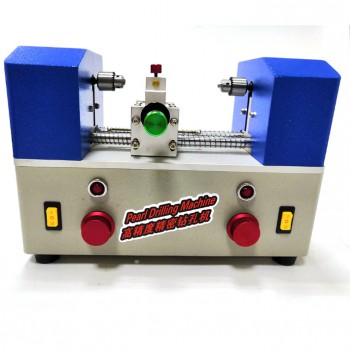
In the world of jewelry making, precision and efficiency are key to producing high-quality pieces that captivate customers. For jewelers who work with pearls, one tool can dramatically elevate productivity and craftsmanship — the pearl hole drilling machine. Whether you design delicate earrings or elaborate necklaces, this compact yet powerful device can help you streamline production and improve the quality of your finished jewelry.
A pearl hole drilling machine is designed specifically to create clean, centered holes in pearls of various sizes. Unlike manual drilling methods, which can be inconsistent and time-consuming, a dedicated machine ensures perfect alignment and uniform depth. This precision not only preserves the beauty of each pearl but also reduces breakage and waste — a significant advantage when working with such valuable materials.
truongyen2442y 發表在 痞客邦 留言(0) 人氣(1)
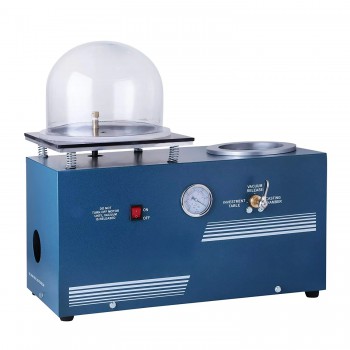 For many jewelry enthusiasts, the dream of crafting personalized rings, pendants, or earrings once seemed out of reach—requiring industrial equipment, specialized skills, and large workshops. Today, that barrier is quickly disappearing thanks to compact automatic jewelry casting machines. These small yet powerful devices are transforming home studios and small workshops into efficient jewelry foundries, making DIY jewelry casting easier, safer, and more precise than ever before.At the core of this innovation lies miniaturized vacuum and centrifugal casting technology. Unlike traditional large-scale casting systems that require significant space and investment, compact casting machines are designed for accessibility. They integrate heating, melting, and casting functions into one streamlined unit. Most use induction or resistance heating to quickly melt metals like gold, silver, or brass, reaching the ideal pouring temperature within minutes. Once melted, the machine automatically applies vacuum or centrifugal force to draw molten metal into the mold, ensuring perfect detail reproduction and minimal air bubbles.
truongyen2442y 發表在 痞客邦 留言(0) 人氣(4)
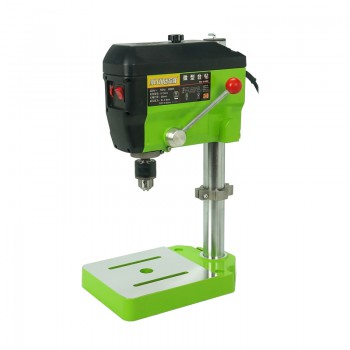 In jewelry making, precision is everything — a slight misalignment or uneven hole can ruin an otherwise flawless design. That’s where a drill press becomes an invaluable tool. Unlike handheld drills, a drill press offers stability, accuracy, and control that jewelers need when working with delicate metals, gemstones, and other materials. Here’s how to use one effectively for your craft.1. Choose the Right Drill Press and Bit
truongyen2442y 發表在 痞客邦 留言(0) 人氣(2)
